
Is Learning Chess Notation Worth It for Casual Beginners?
Decide whether to learn chess notation now, later, or not at all by checking your play goals, study habits, setup time, and simpler alternatives.
From the editorial desk
We sort out the small decisions that can stall a first game: which piece moves where, whether a jump is required, and whether that handsome set will be readable, storable, and pleasant to play.
Choose by the task
You do not need tournament vocabulary to have a good first game. Pick the snag you are trying to solve.
A useful argument to settle
Wood feels substantial and looks at home on a coffee table. Plastic is usually easier to replace, carry, label, and hand to a room full of beginners. The right choice is less about prestige than where the set lives and how often it moves.
Compare wooden and plastic sets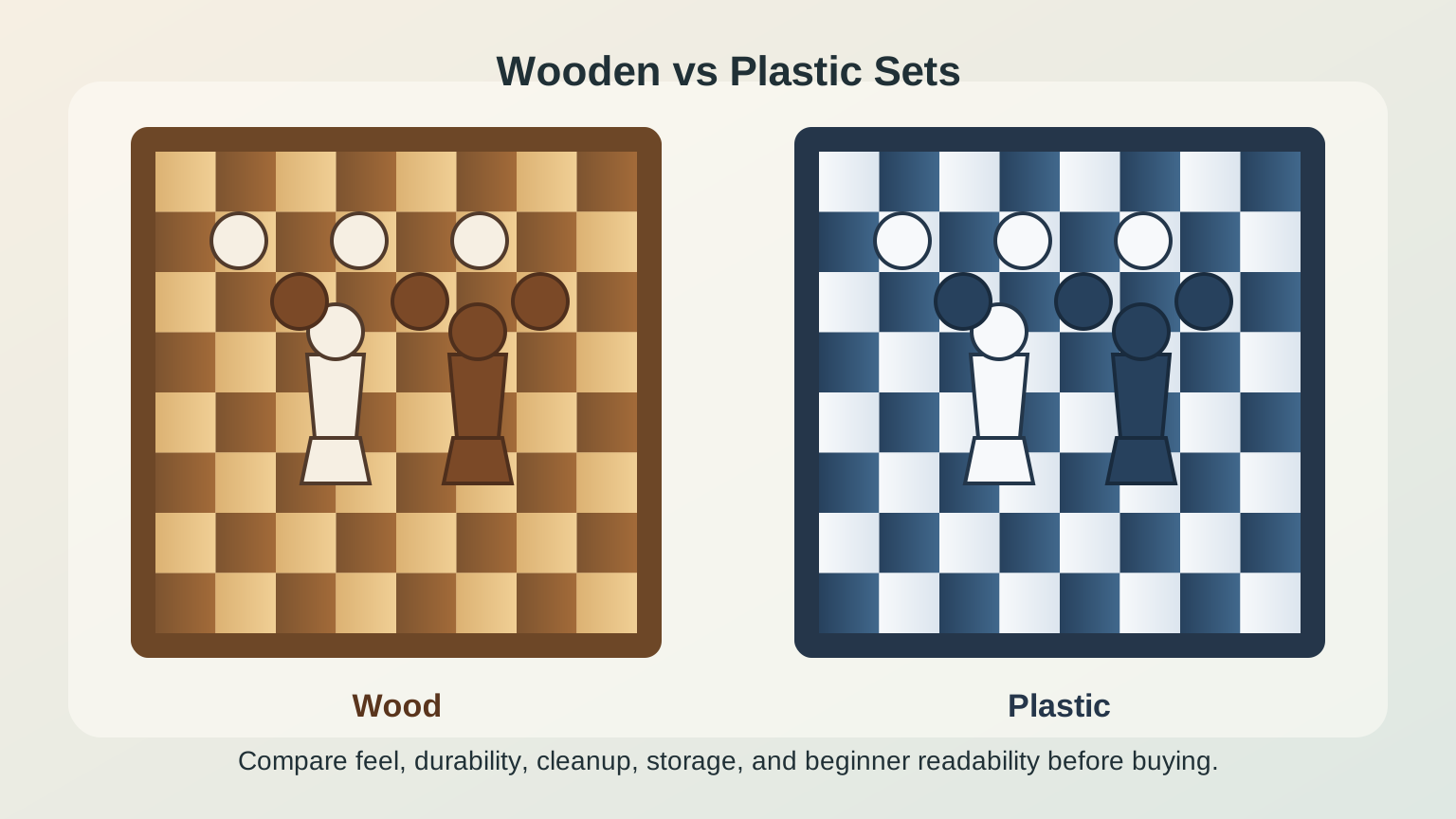
How the guides are edited
That is when someone is hunting for a missing pawn, a child is asking whether kings can move backward, and a gift buyer is wondering if the board is too small. The site is edited for those ordinary moments—not for showing off expertise.
We compare published details and durable buying criteria. We do not claim hands-on testing that did not happen, turn one house rule into universal law, or dress marketplace ratings up as editorial proof.
Read the editorial process“Readable pieces beat clever styling. A storage plan beats a fancy box. And checkers deserves more than a footnote.”
— The Good Chess & Checkers editorial desk
Recently published
Decide whether to learn chess notation now, later, or not at all by checking your play goals, study habits, setup time, and simpler alternatives.
Compare chess puzzle books and puzzle apps for beginners by feedback, sequence, focus, board transfer, access, cost, and skip criteria.
Decide whether a first checkers tournament fits a beginner by ruleset, capture rules, format, schedule, total cost, and lower-pressure alternatives.
Three things we look for
Clear shapes and board contrast matter more than ornamental detail, especially for first games and mixed ages.
Browse buying guides 02A board that never leaves its awkward box is not practical. Storage, carrying, and replacement pieces count.
Explore gear guides 03Define the move, show the exception, and say when families, apps, and organized play may use different rules.
Find rules help