
Correspondence chess can be worth trying when a beginner wants time to think, can return to a position reliably, and understands the chosen service's rules about analysis help. Start with one free, friendly game and a generous move window. Delay it if legal piece movement still feels uncertain, choose live slow chess if conversation and immediate feedback matter more, and skip it if notifications or a game lasting days will feel like an obligation.
Here, “correspondence chess” means a game in which players make moves at different times, often with hours or days allowed per move. Some services call this daily chess. Platform rules, permitted tools, vacation settings, account requirements, privacy controls, and inactivity policies vary, so verify the current terms before starting.
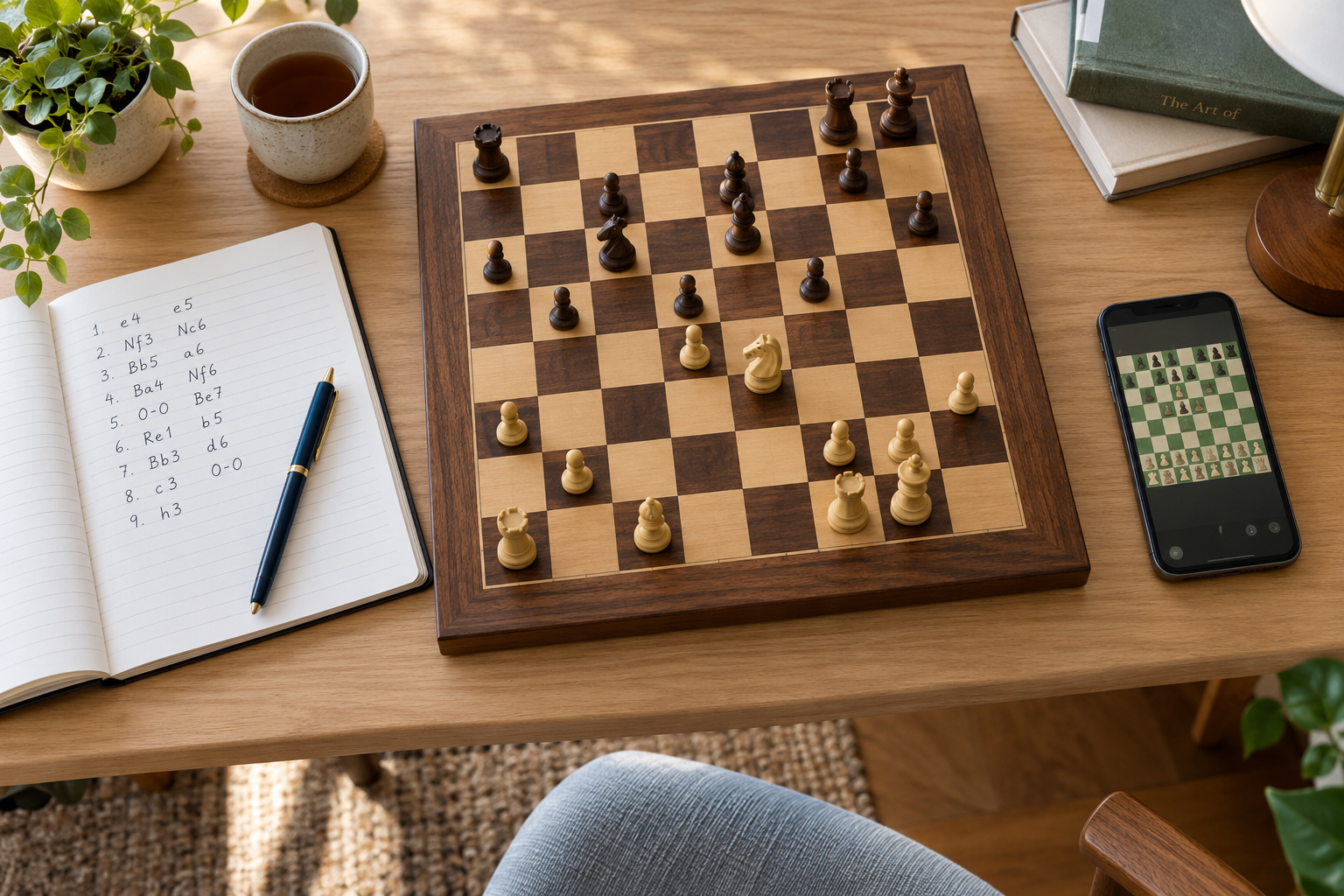
Quick verdict: start, trial, delay, choose an alternative, or skip
- Start when you know the legal moves, enjoy revisiting a position, and can check the game within the agreed window.
- Trial one game when the slower pace sounds useful but you do not yet know whether waiting between moves will hold your interest.
- Delay when you still need frequent help completing legal moves or cannot explain the service's assistance rules in plain language.
- Choose live slow chess when you want a complete game in one sitting, post-game conversation, or an instructor nearby.
- Skip when a long-running commitment, account notifications, screen time, or an unfamiliar opponent makes the format less enjoyable than local play.
What the format changes for a beginner
Extra time removes the pressure to move immediately, but it adds a different skill: reconstructing what you were thinking after a break. A beginner may have time to check every attacked square and compare candidate moves, yet still lose the thread after a day away. Notes can help, provided the game's rules allow them.
The format also changes the social rhythm. There may be little conversation, no shared board, and no clear finish time. That is useful for mismatched schedules, but it does not replace the immediate correction available in a lesson or the energy of a face-to-face game.
Use these criteria before starting
| Decision check | Good fit | Reason to pause |
|---|---|---|
| Move window | You can check the game comfortably before each deadline. | The schedule requires reminders, rushed moves, or frequent vacation settings. |
| Rules clarity | You understand what notes, books, analysis boards, engines, and outside advice are permitted. | The assistance policy is unclear or you would need another person to interpret every move. |
| Learning goal | You want to practise careful move selection and recording your reasoning. | You mainly want rapid feedback, social play, or many complete games. |
| Account fit | Notification, privacy, chat, reporting, and opponent settings are acceptable. | You cannot find or control the settings that matter to you. |
| Commitment | One unfinished game will remain interesting for days or weeks. | An open task will create pressure or be forgotten. |
Setup and maintenance tradeoffs
An online game can cost nothing, but it still needs an account, a dependable device, notification choices, and a small routine. Check whether access depends on a paid tier, whether the service limits free games, and how account deletion or cancellation works before paying for anything. A paid subscription is unnecessary if one free game already meets the goal; use the site's chess app subscription decision guide before accepting recurring terms.
A physical analysis board is optional. It can make a position easier to study away from a screen, but you must copy every move accurately and keep the board undisturbed. A notebook can preserve candidate moves and the reason for your final choice. Do not buy special correspondence equipment: an ordinary set and plain notebook are enough.
Red flags
- The service's current rules do not clearly say what assistance is allowed.
- An opponent, group, or message asks you to move discussion or payment to an unfamiliar channel.
- You feel pressure to open many games before completing one.
- The time control looks generous only because vacation, timeout, or inactivity terms were overlooked.
- A premium plan is presented as necessary before you have tested the free experience.
- The format is being sold as a guaranteed way to improve rather than one possible practice method.
Who should skip correspondence chess?
- A first-day learner who still needs a person nearby to explain legal moves.
- Anyone who wants chess to be a contained activity rather than a background commitment.
- A player motivated by conversation, a visible opponent, or finishing in one sitting.
- A family that is not comfortable with the selected account, communication, privacy, or opponent controls.
- A beginner tempted to use prohibited assistance instead of choosing and explaining a move independently.
A low-risk first trial
- Learn the basic movement rules first with the beginner chess-piece guide, the site's current rules pillar.
- Read the chosen service's current fair-play, assistance, timing, vacation, privacy, and communication rules.
- Choose one known opponent when possible and agree on a generous pace.
- Play one game only. Write a short note after each move: the opponent's threat, two moves considered, and why one was chosen.
- After the game, decide whether the waiting improved your thinking or merely stretched the game.
Alternatives that solve a different problem
Choose a live casual game when you want practice completing a full game. Choose a beginner club when you want opponents and conversation; compare the commitment with the online chess club membership guide. Choose a lesson, course, or shared analysis session when you need feedback rather than more thinking time. For a no-account option, keep a position on a board and return later to list candidate moves without sending them to an opponent.
Bottom line
Correspondence chess is worth a free one-game trial for a beginner who already knows legal moves, prefers reflection to speed, understands the assistance rules, and can maintain a small check-in routine. Its chief benefit is time to make a deliberate choice; its chief cost is carrying an unfinished game across many days.
Delay it while the rules of chess are still the main obstacle. Choose live slow play for immediate human interaction, and skip the format when account friction, unclear policies, notifications, or open-ended commitments outweigh the pleasure of the game.