
A beginner chess camp can be worth it when the child wants a concentrated chess experience, the published starting level genuinely fits, and the daily schedule, group format, caregiver procedures, total commitment, and cancellation terms are clear. Choose a sample day or the shortest suitable program when interest is real but the pace is unknown. Wait or skip when the child is reluctant, key policies are missing, or several long days would turn curiosity into pressure.
A camp is not automatically better than a recurring class, a free club, or relaxed games at home. This guide is a decision framework, not an assessment of any provider. Verify current age rules, prerequisites, staff and supervision information, arrival and pickup procedures, accessibility, equipment requirements, fees, and terms directly with the organizer.
The Good Chess & Checkers may earn commissions from qualifying purchases.
Quick decision aid
Use an ordinary beginner set for a no-pressure home trial
A complete, readable board is enough to see whether the child enjoys moving pieces, solving a short position, and returning for another game. Do not buy camp equipment until the provider confirms what participants must bring.
Quick verdict: enroll, sample, wait, choose an alternative, or skip
- Enroll when the child wants the experience, the camp accepts their current skill level, the normal day is understandable, and every practical term works for the household.
- Sample first when the organizer offers an open session, single day, or short block and the child is interested but unsure about an intensive group format.
- Wait when the learner needs more familiarity with basic piece movement or the camp day is longer and faster than their current attention and energy comfortably support.
- Choose an alternative when a weekly beginner class, library club, family games, or another activity better matches the child's preferred pace.
- Skip when prerequisites, the daily routine, caregiver procedures, complete cost, or cancellation terms remain unclear after direct questions.
Why camp is different from an after-school program
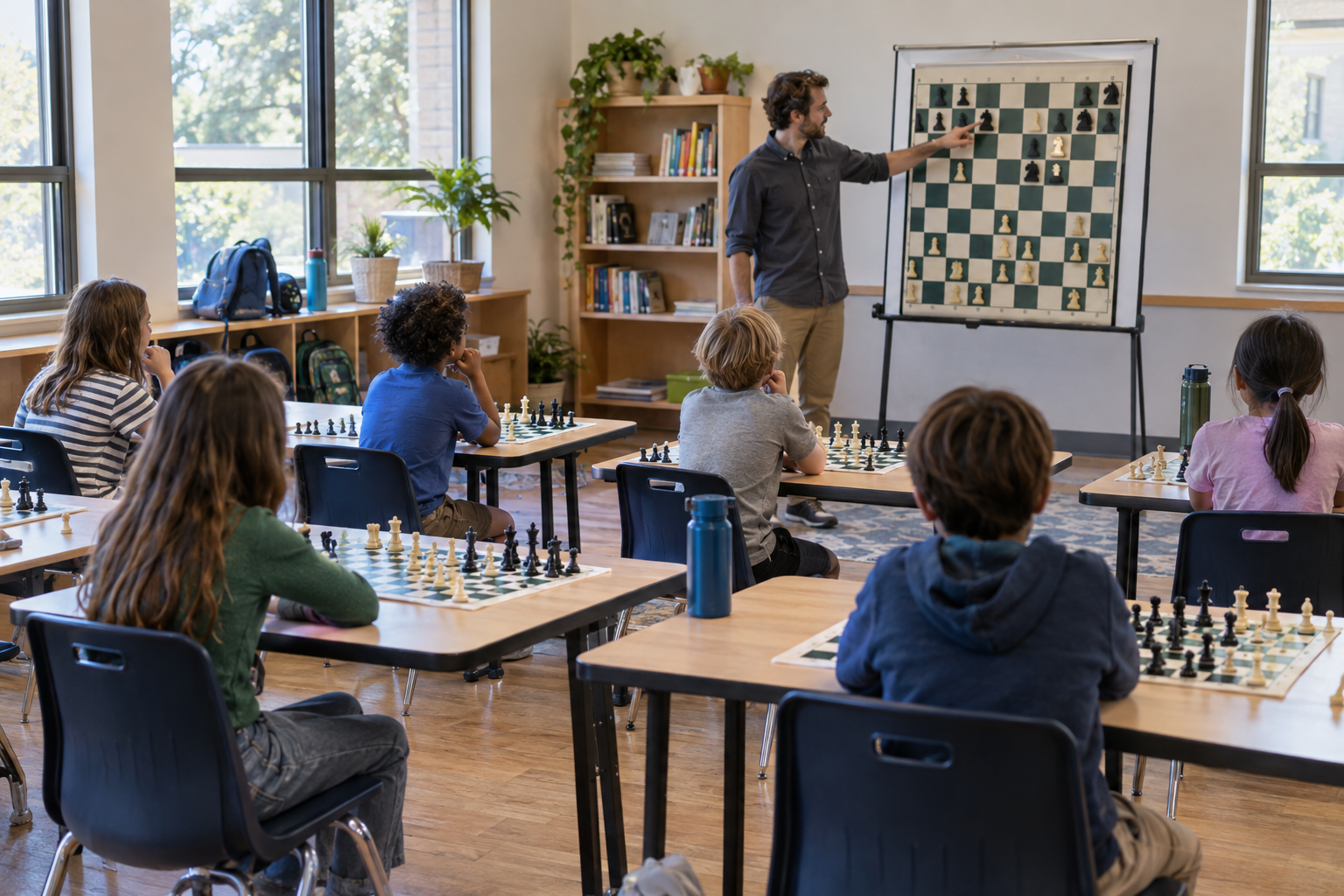
A camp concentrates more activity into consecutive days or a short block. That can suit a child who likes immersion, but it also magnifies a mismatch in pace, group comfort, schedule, or expectations. A recurring after-school chess program spreads the decision across a term and must fit a weekly pickup routine; camp requires the family to judge longer days, breaks, meals, arrival and departure, and what happens if the child does not want to return after day one.
“Beginner” is not a universal prerequisite. One camp may welcome children who have never moved a pawn; another may expect legal piece movement or complete games. Use the provider's current description and a direct answer, not the label alone.
Verify a normal day, not just the headline
| Decision check | What to ask | Reason to pause |
|---|---|---|
| Starting level | What must a child already know, and how are first-time players introduced? | “All levels” appears with no explanation of how beginners participate. |
| Daily mix | How much time is spent watching, solving, playing, waiting, taking breaks, and doing non-chess activities? | The description promises improvement but does not describe a normal day. |
| Grouping | How are learners grouped, paired, and helped when experience differs? | The only answer is an unsupported claim that every child will keep up. |
| Caregiver procedures | What are the current sign-in, attendance, contact, pickup, late-pickup, medication, accessibility, and emergency procedures? | Material procedures are unavailable before enrollment. |
| Commitment | What dates, hours, fees, supplies, meals, transport, refunds, credits, transfers, and cancellation deadlines apply? | A headline fee or date range hides necessary details. |
Check interest without turning it into a test
Before paying for several days, offer two or three short chess experiences at home. Teach only enough to let the child make choices: identify the pieces, practise one or two movement patterns, or play a small-board mini-game. Notice whether the child asks to continue or comes back later. Do not use wins, speed, puzzle scores, or perfect rule recall as a camp-readiness exam.
Ask what part sounds appealing: learning moves, solving puzzles, playing other children, using a large teaching board, or simply trying a new activity. Then compare that answer with the camp's actual schedule. A child who wants casual games may not enjoy long demonstrations; a child who likes guided puzzles may find mostly unstructured play frustrating.
Read the full schedule against the child's real day
Put arrival, departure, travel, meals, breaks, and every camp day on the calendar. Consider whether the child is accustomed to that length of organized group activity. Ask what participants do during early arrival, transitions, breaks, and completed games rather than assuming every listed hour is active instruction.
If chess camp follows another demanding week or overlaps a family commitment, the apparent convenience may create a tiring routine. A shorter program can be the better fit even when the longer option looks like better value on a per-day basis.
Confirm provider information directly
Use the organizer's official current materials to identify who operates the camp, who the caregiver contacts, and what the provider states about staff, supervision, group arrangements, venue access, and participant procedures. This page cannot verify credentials, safeguarding practices, accessibility, or suitability for a particular child. Ask the provider about any specific support or accommodation need before enrolling.
Be cautious with promises of guaranteed progress, tournament results, rating gains, confidence, or mastery by the end of camp. A useful description explains activities and starting expectations without promising a child's outcome.
Calculate the complete commitment
Compare the current enrollment fee together with registration charges, required memberships, meals, transport, extended care, supplies, and optional events. Check when payment is due and what the written refund, transfer, credit, absence, cancellation, and provider-cancellation terms say. Do not rely on an old listing, social post, or another family's prior arrangement.
Also count the household effort: daily travel, preparation, pickup reliability, food requirements, and recovery time. A free or less expensive program is not automatically the better fit if its timing makes attendance fragile.
Who should wait or skip?
- A child whose interest is mostly an adult's project rather than their own choice.
- A new learner who becomes discouraged by long group explanations and would prefer short one-to-one play.
- A child who wants social free play when the camp is primarily structured instruction, or the reverse.
- A household that cannot reliably meet the stated arrival, pickup, attendance, or transport plan.
- A family asked to pay before the organizer provides the prerequisites, normal schedule, caregiver procedures, full charges, and cancellation terms needed for the decision.
Lower-commitment alternatives
Start with the site's guide to how chess pieces move and the practical approach to teaching chess and checkers without overwhelming kids. A short recurring class may suit a learner who needs recovery time between sessions, while a casual school or library group may suit a child who mainly wants opponents. Verify each group's current arrangements just as you would a camp.
Borrow a complete set before buying when possible. If home practice continues, choose a board for recognizable pieces, contrast, table fit, and storage rather than camp branding or promised results. The planned family pillar is not yet built, so the family and kids guide section is the current route to age-fit teaching and equipment decisions.
Questions to ask before enrolling
- What does “beginner” mean here, and what must a child know on the first day?
- What does a typical day include, with approximate time for instruction, play, breaks, meals, and other activities?
- How are children grouped and paired when experience or pace differs?
- Who is the caregiver's contact, and where are the current arrival, attendance, pickup, accessibility, and emergency procedures?
- What equipment, food, clothing, account, device, or other item must the family provide?
- What is the complete charge, and what happens after an absence, withdrawal, transfer, or provider cancellation?
Bottom line
A beginner chess camp is worth considering when the child is genuinely interested in an intensive group experience and the provider's current prerequisites, daily format, caregiver information, schedule, requirements, fees, and terms all fit. Use the smallest practical commitment when the pace is still unknown.
Wait or choose a lower-pressure alternative when the child needs shorter sessions, the family routine is strained, or important facts are missing. The goal is not to buy the most chess instruction in the fewest days; it is to choose a format the child understands, wants to attend, and can realistically use.