
A folding table can give chess and checkers a proper playing surface without permanently claiming a dining table or small room. The useful choice is not simply the smallest table: it must support the full board, leave room for captured pieces or a clock, and give both players comfortable knee space.
This is a category comparison, not a ranking of named tables or a claim that we tested them. Verify every listing's open dimensions, folded dimensions, table weight, stated load limit, locking instructions, and floor-use guidance before buying.
As an Amazon Associate, The Good Chess & Checkers may earn from qualifying purchases.
Quick decision aid
Browse folding game tables by format
Start with a level, wipe-clean surface and published open and folded dimensions. Compare the leg layout against your chairs, and confirm how the legs lock and release in the maker's instructions.
How to compare folding tables for board games
- Usable playing area: measure the board's outer frame, then allow space for captured chess pieces, crowned checkers, and an optional clock or scorebook.
- Level surface: look for a flat top without a deep center seam, raised texture, or soft padding that can tilt pieces.
- Leg layout: compare the frame and cross braces with chair width and knee position, not just the tabletop dimensions.
- Locking method: read the setup instructions and confirm how the legs are secured in the open position. Do not infer stability from photos alone.
- Open and folded size: map both footprints, including the route through doors, closets, or stairs.
- Carry weight: decide who will move it and how far. A handle helps only when the folded shape remains manageable.
- Surface care: choose a finish compatible with your board base and routine, then follow the table maker's cleaning guidance.
Best all-around category: square card table
A square folding card table usually gives two opponents similar reach and leaves useful side space around a standard home board. Its four-leg layout can feel familiar, and the square top also works for checkers lessons or a family game shelf that comes out on weekends.
Best for: two-player games in a multipurpose room where the table will be folded after play.
Skip it if: corner legs or braces collide with your chairs, the top is smaller than the board plus hand space, or its folded width will not fit the intended closet.
Best for narrow storage: compact rectangular table
A narrow rectangular top can store against a wall or behind a door more easily than a broad square table. It can also place the players at the shorter ends, but only if the board fits with room for hands and the frame leaves clear knee space.
Best for: apartments, spare rooms, or shared spaces with a long but shallow storage slot.
Skip it if: the tabletop is too narrow for the board frame, captured pieces, and a stable clock position.
Best flexible-height category: adjustable folding table
An adjustable-height table can serve different chairs or standing analysis sessions. Favor clearly indexed height positions and follow the maker's setup sequence each time. Measure legroom at the exact height you plan to use because crossbars and telescoping sections may change the usable space.
Best for: a shared room with different seating arrangements or occasional standing study.
Skip it if: the adjustment controls are hard for the intended user to operate or the chosen height produces awkward board reach.
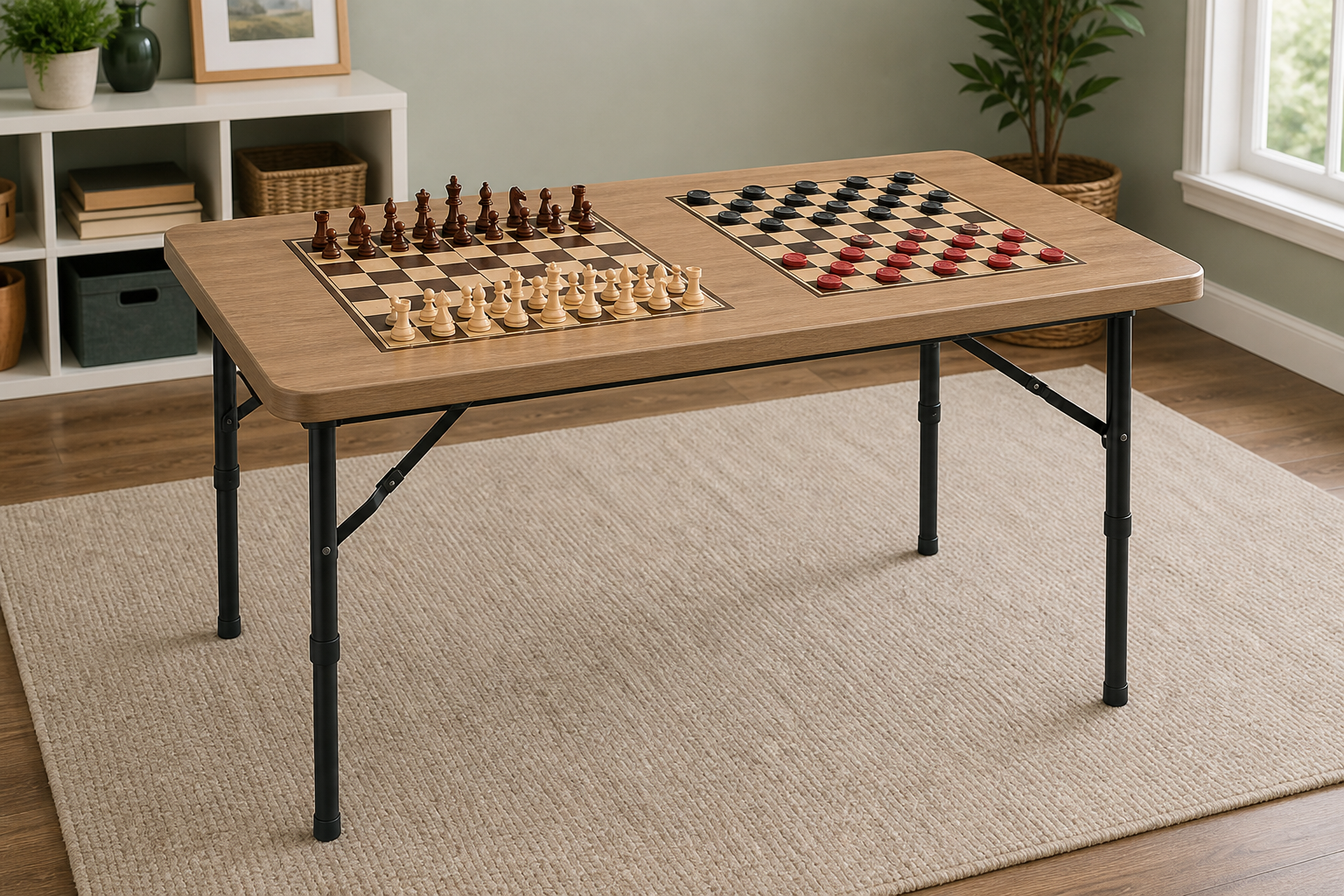
Best for group programs: lightweight banquet-style table
A longer folding table can hold two boards for a family session, library event, or casual club. Before treating it as a multi-board station, divide the published top dimensions into complete playing zones and leave gaps so neighboring elbows and clocks do not crowd each other.
Best for: supervised group setups that need several boards on one removable surface.
Skip it if: one person cannot move it through the room safely, the center support interrupts seating, or separate square tables would make board access easier.
Quick comparison framework
- Choose a square card table for a balanced two-player setup and general family use.
- Choose a compact rectangle when folded storage depth is the deciding constraint.
- Choose adjustable height when the same surface must work with genuinely different seating arrangements.
- Choose a banquet-style table only when the measured top and leg layout support multiple complete playing zones.
- Choose a permanent chess table when the board stays out and furniture appearance matters more than portability.
Preflight the room before buying
- Measure the board's outer width and depth, not only its playing squares.
- Add the space needed for hands, captured pieces, and any clock or scorebook.
- Mark the proposed open tabletop and chair positions on the floor with removable tape.
- Check chair width, knee height, and where the listed legs and braces will sit.
- Measure the folded storage slot and every doorway or turn along the carrying route.
- Read the maker's setup, locking, load, floor, and care instructions before ordering.
If a dedicated table will stay set up between sessions, compare whole-table cover formats by measured clearance and access routine. A cover does not make a folding table suitable for permanent setup or replace clearing the board before folding it.
Who should skip a folding game table?
Skip one if your current dining table already gives the board a level, protected surface without disrupting meals, or if lifting and unfolding furniture would make you play less often. A wall board, lap-sized magnetic set, or compact roll-up set may suit a room with no safe open floor area. Buyers who want the board permanently displayed should compare fixed chess tables instead.
Bottom line
A square card-table format is the simplest starting category for two-player chess and checkers, while a compact rectangle can solve a narrower storage problem. Adjustable and banquet-style tables serve more specific seating or group needs. In every case, buy from measurements: the board footprint, player reach, leg clearance, folded route, and maker's setup instructions matter more than a generic “game table” label.